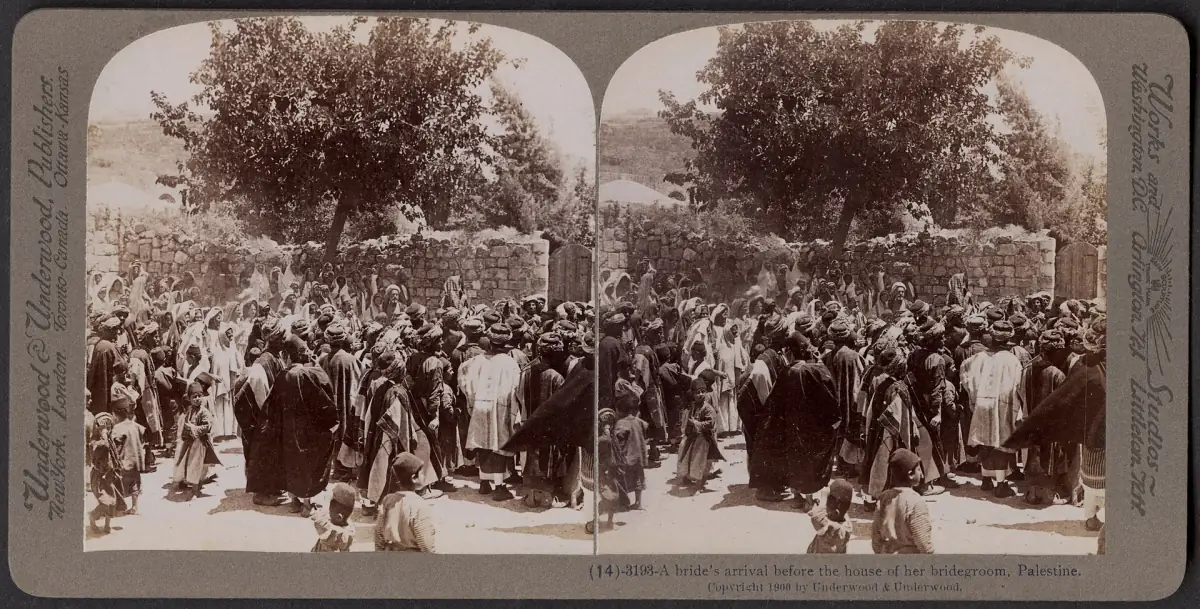
Ramallah history and the founding tradition
Ramallah history is easier to follow when the city’s founding tradition is distinguished from its later administrative chronology. The municipality traces the modern founding tradition to the family of Rashed al-Haddadin in the 16th century. This is an account of the modern town’s origins, rather than an archaeological date for the first human settlement. Keep that distinction in mind when reading a short summary or looking at older buildings.
The old town provides a separate architectural perspective. The municipal tourism portal associates its development particularly with the 17th and 18th centuries and the Ottoman period. Narrow lanes, stone houses, traditional markets and places of worship form the historical core described by the city. For the practical distinction between individual sights, use the sights and museums guide.
Regional context for a city visit
The regional excursion from Jerusalem provides a broader setting for a visit involving Ramallah, Jericho and Bethlehem. Its included services are transport from Jerusalem, a local guide, an Arabic-style lunch and a local dessert, with a duration of 10 hours. It is a regional excursion rather than a dedicated Ramallah history or museum tour. The published route includes Arafat’s grave; restricted access can replace Ramallah with additional time in Jericho and Bethlehem. A museum visit or admission is not part of the stated included services.
Ramallah in a regional itinerary
This Jerusalem departure places Ramallah in a regional itinerary, subject to access restrictions.
Hand-picked tours, booked through Viator. Prices are indicative starting prices in US dollars (as of November 2026). Tap a tour for live availability and the current price in your currency.

A regional setting for Ramallah
The Jerusalem departure combines regional stops, with additional time in Jericho and Bethlehem possible instead of Ramallah.
Municipal administration and later chronology
The municipal chronology dates local administration to 1908. It also records the Israeli occupation in 1967, the creation of the Palestinian Authority in 1994 and the establishment of its headquarters in Ramallah in 1995. These dates describe different kinds of change: municipal administration, a wider historical event and the development of a seat of government. They should not be collapsed into a single founding date.
Ramallah lies in the central West Bank north of Jerusalem. Along with neighbouring Al-Bireh, it serves as a seat of government for the Palestinian Authority. Ramallah and Al-Bireh are closely connected neighbouring cities, rather than one merged municipal administration. Describing their administrative role does not settle a capital-status question. For orientation beyond the chronology, return to the city overview.
Old stone architecture and Al-Manara
The municipal old-town account names an old olive press and Al-Sahl Street in the old Mar-Giryes quarter. It also identifies an Ottoman court building dating from 1902, formerly used by police and officials. These references help connect stone architecture with civic and everyday uses. A named historic building does not itself establish public access to its interior; plan any interior visit separately.
Al-Manara Square offers another connection between the city’s public spaces and its remembered origins. The municipality describes it as a historic link with Al-Bireh and associates its stone lions with the city’s original families. It traces the name to a former manually lit lantern or lantern tower. This municipal account gives the square a historical context without turning the monument into a complete chronology of the town.
Arafat’s grave, mausoleum and museum
The city chronology records the siege of Arafat in the Muqata’a in 2002 and his burial in Ramallah in 2004. The Yasser Arafat Museum was inaugurated in 2016. Keep these dates and places distinct: the grave is a memorial site, the mausoleum houses the tomb, and the museum contains exhibition spaces. The wider government complex is another setting again.
The museum is described as above the mausoleum and linked to Arafat’s former office. That relationship does not make the exhibition and the entire complex a single admission offer. Approach the memorial in a quiet, respectful manner, and establish the arrangements of the particular place you intend to enter. Historical significance does not determine present-day access.

Mahmoud Darwish and literary memory
The Mahmoud Darwish Museum adds a literary perspective to the city’s institutions. The foundation places the museum and Al-Birwa Garden in Al-Masyoun in Ramallah, opposite the Cultural Palace, with an address on Tokyo Street. The complex includes the poet’s grave, a library, a multipurpose room and an open-air theatre alongside the museum and garden.
Personal belongings and manuscripts are among its contents; the municipality also describes audio recordings. These are reasons to distinguish a literary museum visit from a general excursion through the region. A cultural venue and an open-air theatre do not establish an event on any particular date. See the excursion overview for the separate published tour formats.
Historical places and present-day travel advice
Advice reference date: 09.11.2026. Germany’s Auswärtiges Amt warns against travel to the West Bank except East Jerusalem, in advice valid since 29.10.2026, and urges German nationals there to leave if possible. The US State Department advisory of 26.08.2026, updated 22.10.2026, assigns Level 3, Reconsider Travel, because of terrorism and unrest. These are separate national warning systems.
Historical background and a published excursion route do not establish current access. Consult the travel advice and access overview and the responsible authorities for your circumstances. A booking does not authorise passage through a checkpoint or guarantee the Ramallah stop.
Questions about your visit
Does the founding tradition date the first settlement?
The municipality’s account concerns the modern founding tradition of the family of Rashed al-Haddadin in the 16th century. It should not be used as an exact archaeological first-settlement date.
Are Ramallah and Al-Bireh the same municipality?
They are neighbouring cities with close connections. Their shared role as a seat of government does not mean that their municipal administrations have merged.
Does the regional excursion include a museum tour?
Its stated services cover transport, a local guide, lunch and dessert. Treat museum access separately; the Ramallah stop can also change because of access restrictions.